How to Launch an Online Art Store (+ Make Sales Quickly)

With platforms like Shopify, stores open in less time than it takes some people to decide what to name their store.
But just because it’s easy to start a store doesn’t mean it’s easy to make sales. There’s a huge downside to low barriers to entry on the internet. Low barrier = tons of competition. Your artwork is fighting for attention against thousands of artists, every AI-generated art generator, and every single person selling on marketplaces with a halfway decent camera.
So how do you rise above the noise?
Great products are only half the battle. You need to build a professional storefront that builds trust, removes friction, and sells itself.
Fortunately, you don’t need to drop thousands on a site (an expert to build one) to create a store that converts visitors to sales. You need to know what you’re selling, have the right tools to showcase your work in its best light, and approach selling online with a process that ensures you’re running your store like a business.
9 out of 10 artists don’t make any sales because their online store is treated as an online portfolio. They build it, share it on social media once, and expect shoppers to magically buy their artwork.
If you want to actually sell artwork online (and make a living doing it), you need to approach your store with a business-minded process.
Below, I’ll outline the exact steps I took to build my art store, make my first sale, and never looked back.
I’ll cover everything from picking the right platform & product strategy, visual tools to overcome buyer hesitations, content strategy, promotion tactics that create urgency without devaluing your work, and more.
Let’s get into it.
Pick a Platform: Shopify
Don’t overthink this. If you want to sell art online, Shopify is the place to be. It was built for commerce (duh), integrates with major payment processors right out of the box, and has an app store filled with everything you could possibly need to grow your store as you scale.
You don’t need coding experience (hell, you don’t even need to write “about me” copy), and setting up your store only takes a couple days, not months.
Once you’re in, setting up the basics of your store should take you about an hour. Choose a clean, minimal theme that highlights your art. None of that funky custom motion stuff that distracts from your work. Remember, your art is selling the store, not the other way around.
Decide What You’re Selling
Ok, now for the fun part. If you sell art, you have two product paths: you can sell originals or you can print products to order (POD). Better yet, you can do both.
Selling Original Artwork
This one’s easy. You make it, you list it, take a photo and upload it. Simple. When it sells, you package it up and ship it out. Easy peasy.
You’ll have higher margins selling originals, but you’re limited to how many pieces you can produce at once.
Take into consideration your skill level, time commitment, and costs for materials when pricing your artwork. Don’t undersell yourself because you think your art isn’t “good enough” 99% of people know that original art isn’t cheap to purchase.
Sell Art Prints on Demand (POD)
POD stands for print-on-demand. These companies have products printed/uploaded, and ship them to your customers after someone places an order.
Essentially, you upload your art to their platform once, and they handle all printing, fulfillment, and shipping. Zero risk. Minimal investment.
These are my three favorite POD companies:
-
Printful The gold standard. Integrates directly into Shopify so it feels like a native app. Printful offers art prints, canvas prints, framed prints, phone cases, tote bags, you name it. Quality is great, shipping costs are reasonable, and their free mockup generator is top notch.
-
Printify Functions just like Printful, but Printify gives you access to tons of different print providers. Instead of being stuck with 1 company to print everything, you can toggle between providers and see who has the best pricing+locations for your needs.
-
Gelato Same concept, but they have printing facilities all over the world which allows for faster shipping times abroad. If you have a customer base outside North America, Gelato is a great option. Also committed to sustainability.
All three allow you to sell framed prints. Trust me when I say this makes a bigger difference than you think. Framed prints yield higher prices and remove the customer objection of “I’m going to frame it later” (lies, they never frame it).
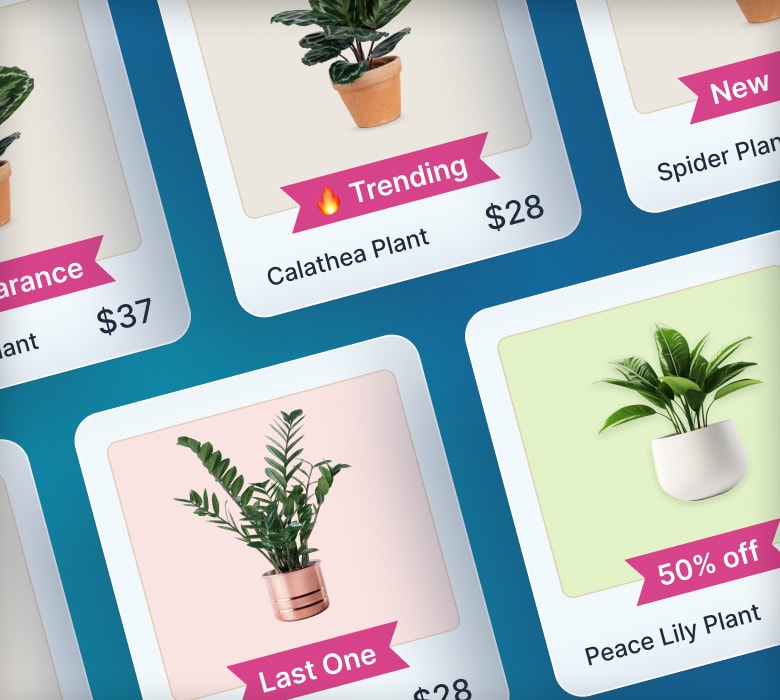
Learn How to Double (2X) Your Shopify Sales with Product Labels
-
Boost sales by highlighting key features with product badges
-
Increase conversions by promoting scarcity, urgency and social proof
-
Sell more with targeted promotions to increase average order sizes
Build and Grow Your Art Store
You've got your platform and your products. Now it's time to turn your store into a business that actually sells. From product photography to promotions, these are the steps that separate stores that make sales from stores that collect dust.
Photograph Your Art Like a Salesman
It sounds silly, but bad photography is one of the top reasons websites lose sales. If your product photography looks like crap, shoppers lose trust and won’t give you a second glance.
When photographing original artwork, make sure you’re either shooting in natural lighting or have proper indoor lighting setup. Take all photos straight on nothing funky or off-angle.
It never hurts to include some closeup shots of your work that show texture and brush strokes. Add an additional photo that has something in the shot for scale. A person holding the artwork or sitting beside the wall it hangs on works great.
For Print-on-Demand products, your print provider will be generating mockups for you. But that doesn’t mean you shouldn’t use high resolution art files (minimum of 300 DPI). Always test order your own products so you know exactly what you’re sending your customers.
Make It Easy for Shoppers to Visualize Your Artwork

THIS is where you elevate your Shopify art store above the thousands of other online art stores.
The average person sucks at visualizing how a painting would look on their wall. Will it match the couch? Is it too big? Too small? Far too often, shoppers will look at your product page, have doubts about whether it works in their space, and click off to look somewhere else.
Remove that doubt by letting your shoppers see your art on their wall before they buy.
Picture It is an Augmented Reality app available in the Shopify App Store . It allows shoppers to browse your artwork and instantly “view it on their wall” using their phone camera. You take literally zero seconds uploading your products, and your conversion rates go through the roof.
Customers can see your art hung on their wall at true-to-life scale. Once they can visualize it in their life, they buy it.
Do this for every single product. Literally takes 2 minutes to get each item ready to view in AR. It’s worth the time.
Outline Your Store’s Structure
Your menu should be kept nice and simple:
- Originals
- Prints
- Framed Prints
- By Size
- By Frame Color/Material
- By Subject or Style
Write Product Descriptions That Paint a Picture
Nobody cares about “Night Sky Abstract Painting, 16×20.” Paint a picture with your words. Where could this hang? What mood does it convey? What colors are dominant? What inspired you to create this piece?
These may seem like unnecessary details, but your product descriptions are a great place to sell the art as more than just a painting. It hangs on walls. In homes. Offices. Bedrooms.
You get the idea.
Show dimensions in inches and centimeters. List your materials. Provide detailed shipping and return policies.
It’s art, be nice. Write that you’ll gladly accept returns if they don’t love the piece (within 30 days; print sales). Print sales can generally have returns since customers are shopping with a specific space in mind. Originals are often considered final sale.
Create Evergreen Content
An abandoned online store is a big red flag. If your Facebook page has the same four pictures from when you opened your store three years ago, no one is going to trust you.
Your content isn’t meant to sell direct sales. Think of it as proactive SEO. The more relevant, quality content you have associated with your store, the more likely you are to surface on Google when someone is searching for that “one art print to kick start my interior design journey.”
Use your content to give customers reasons to come back to your store. Enticing them to subscribe and visit your store regularly is step one to turning browsers into buyers.
- Schedule regular blog posts / social media content
- Behind the scenes photos of your creative process
- Announce new releases when you add to your store
- When customers share pics of your work tag you
- Host art tips / ideas that align with your art style
- Studio updates that allow your followers to feel involved
Tools like Later (my favorite), Buffer, or Shopify’s built in social posting feature allow you to create multiple pieces of content at once then schedule them out. You want to aim for at least 3-5 posts per week across your social platforms.
Don’t bombard your followers with daily content updates, but you also don’t want to post once a month. Create a content calendar and stay consistent!
Get Traffic, Make Sales

You opened an online store because you want people to see your artwork. Now you need to get them there!
Build your email list from day one. Offer a discount on their first purchase in exchange for signing up for your newsletter. Email conversion is through the roof compared to social media buyers. Subscribe to your emails, you own that relationship. It’s not Facebook.
Create promotions that reward your customers AND create urgency.
This is where Flair Commerce steps in. Flair Commerce is an incredible Shopify app that allows you to create powerful promotions without needing to know how to code. Their team builds the apps and you come up with promotions that actually sell products.
You can stack discounts, create tiered promotions (buy 2 prints, get 15% off your entire purchase. Buy 3 prints, get 25% off), do flash sales, reward returning customers.
Promotions are an art and science. You’re not slashing prices to get folks in your door. You’re creating a narrative in your customers head that they’d be crazy not to purchase now.
Only run promotions for a limited time. Tie them to holidays, product launches, or if you need to sell inventory.
Always A/B different promotions to learn what works and what doesn’t.
Launch Already
Now that your storefront is built and you have products to list, it’s time to publish your store and watch the dollars roll in.
Seriously. Stop reading this and go publish your store. No one needs to see every pencil sketch you’ve made testing out new styles. Pick your best 10-20 pieces and launch today.
You’ll learn more about your audience and what sells in one week running your store than you would trying to figure out “the perfect product to sell” over the next six months.
Analyze your best selling products. Keep tabs on what shoppers are viewing but aren’t buying. Is it priced wrong? Do your mockups not look good enough? Are you unsure of your shipping methods? Figure it out, then make more of that style or size.
Reach out to your customers and ask for feedback. I typically send a follow up email once my prints ship asking how the whole process was for them. The feedback you’ll learn from these types of emails is pure gold.
There you have it!
The secret to selling art online isn’t a magical storytelling formula. It’s building your art store on Shopify, giving your customers both originals and prints to choose from, letting them see your artwork on their wall with Picture It, filling your feed with consistent content, running well thought out promotions with Flair Commerce, and shipping orders within 1-2 business days in a professional package.
You’ve got the tools, now go show up (and sell) like you mean it.
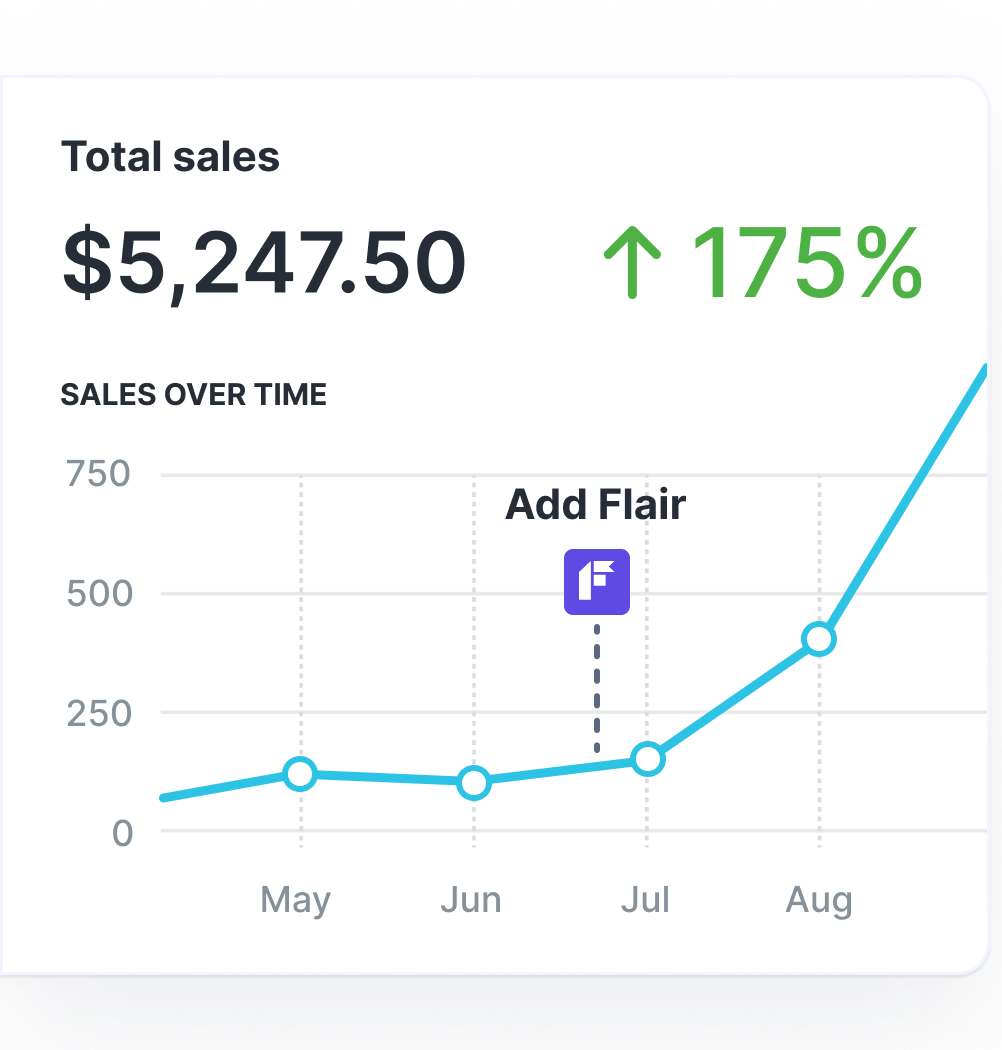
Grow Your Shopify Sales by over 175% with Flair
-
Increase sales using product badges and sales banners
-
Maximize conversions with scarcity, urgency and countdown timers
-
Automate promotions with targeted rules and scheduling